
Learn whether you can use your personal bank account for your small business, including legal implications, benefits, and potential drawbacks.
Australia’s small business field can be both exhilarating and challenging, especially when finances start flowing in.
Many new entrepreneurs wonder if they can simply stick to their personal bank account instead of opening a separate one.
It’s a common question, particularly among sole traders who see convenience in keeping everything in one place.
Yet, the pitfalls are significant and can involve everything from tax compliance to professional image.
In this blog post, we’ll explore the pros, cons, and best practices for managing business finances in Australia.
When thinking about whether you can use your personal bank account for a small business, your business structure is the first factor to consider.
🔸 Sole Traders
🔸 Companies, Partnerships, and Trusts
💡 Key Takeaway: If you’re a sole trader, you’re not obligated to have a separate account but most accountants recommend it.
If you operate under a company, partnership, or trust, you’re generally required to keep your finances distinct.
Some new entrepreneurs opt to run their business through a personal account simply because it feels easier at the start. There’s no additional paperwork, fewer fees to worry about, and no extra card to keep track of.
Yet, the simplicity can be deceptive. Banks often include clauses in their terms of service stating that personal accounts are intended for personal use. I
f they see business-related patterns (frequent transfers from clients, large sums deposited regularly) they may flag or even close your account.
You could also face a stressful hunt through statements at tax time, trying to figure out which expense was personal and which was business.
❗ Reasons why you shouldn’t rely on a personal account for business:
Using one account for all your transactions might sound convenient, but problems often arise over time. Here’s what you could be risking:
🔸 Financial Confusion
🔸 Complicated Tax Returns
🔸 Loss of Professional Image
🔸 Bank Account Closure
From a business perspective, first impressions matter.
Imagine you send an invoice for event-planning services, and the bank details read “John Smith – Personal Account.” It may raise questions about the legitimacy or scale of your operation.
🔸 Benefits of a Dedicated Business Account:
The Australian Taxation Office doesn’t mandate that sole traders open a separate bank account, but it strongly advises doing so for clarity. This becomes even more critical when your business grows.
With a dedicated business account, you can:
Without that clarity, you might find yourself guessing which part of an Officeworks bill was for personal purchases versus inventory for the business.
Over time, these small mix-ups add complexity and potential pitfalls when lodging your Business Activity Statements (BAS) or annual returns.
Most Australian banks have strict guidelines on what personal accounts can be used for.
Their concerns often revolve around money laundering, fraud risks, and the need to comply with financial regulations.
If they notice high transaction volumes or frequent client deposits, they might:
For small business owners, an account freeze can be disastrous, especially if you rely on those funds to pay for urgent expenses or vital inventory.
The peace of mind that comes with having a legitimate business account, recognised by the bank as such, can’t be overstated.
A small hobby can turn into a significant revenue stream, sometimes faster than you anticipate. When that happens, you might need more advanced banking features that personal accounts simply don’t offer.
🔸 Advantages of a Business Account for Growth:
Even when you’re legally allowed to operate as a sole trader using your personal account, it pays to follow certain best practices:
🔸 Maintain Meticulous Records
🔸 Track Your GST (If Applicable)
🔸 Separate Funds Whenever Possible
🔸 Consult an Accountant
🔸 Plan Ahead
So, can you use your personal bank account for your small business in Australia?
For sole traders, the answer is technically yes, but it comes with a host of risks and potential complications.
If you run a company, trust, or partnership, having a separate business account is generally not optional – you need one to stay compliant.
Even as a sole trader, mixing personal and business finances often creates unnecessary confusion.
Many Australian entrepreneurs start small, so it’s understandable to feel like a separate account might be overkill in the early stages.
However, most who transition to a business account quickly discover how much easier their accounting, tax preparation, and daily operations become.
By separating personal and business funds, you’ll maintain clearer financial boundaries – and keep your focus on growing your small business the right way.
ANNA provides a practical, user-friendly solution for entrepreneurs in Australia.
You can register your business and open an ANNA business account in just a few minutes, giving you the tools you need to handle everyday tasks confidently.
The process is designed to be seamless, with little to no administrative hassle – perfect if you’d rather spend time growing your venture than worrying about paperwork.
You’ll also get a distinctive debit card, plus a virtual card option that allows you to start transacting right away.
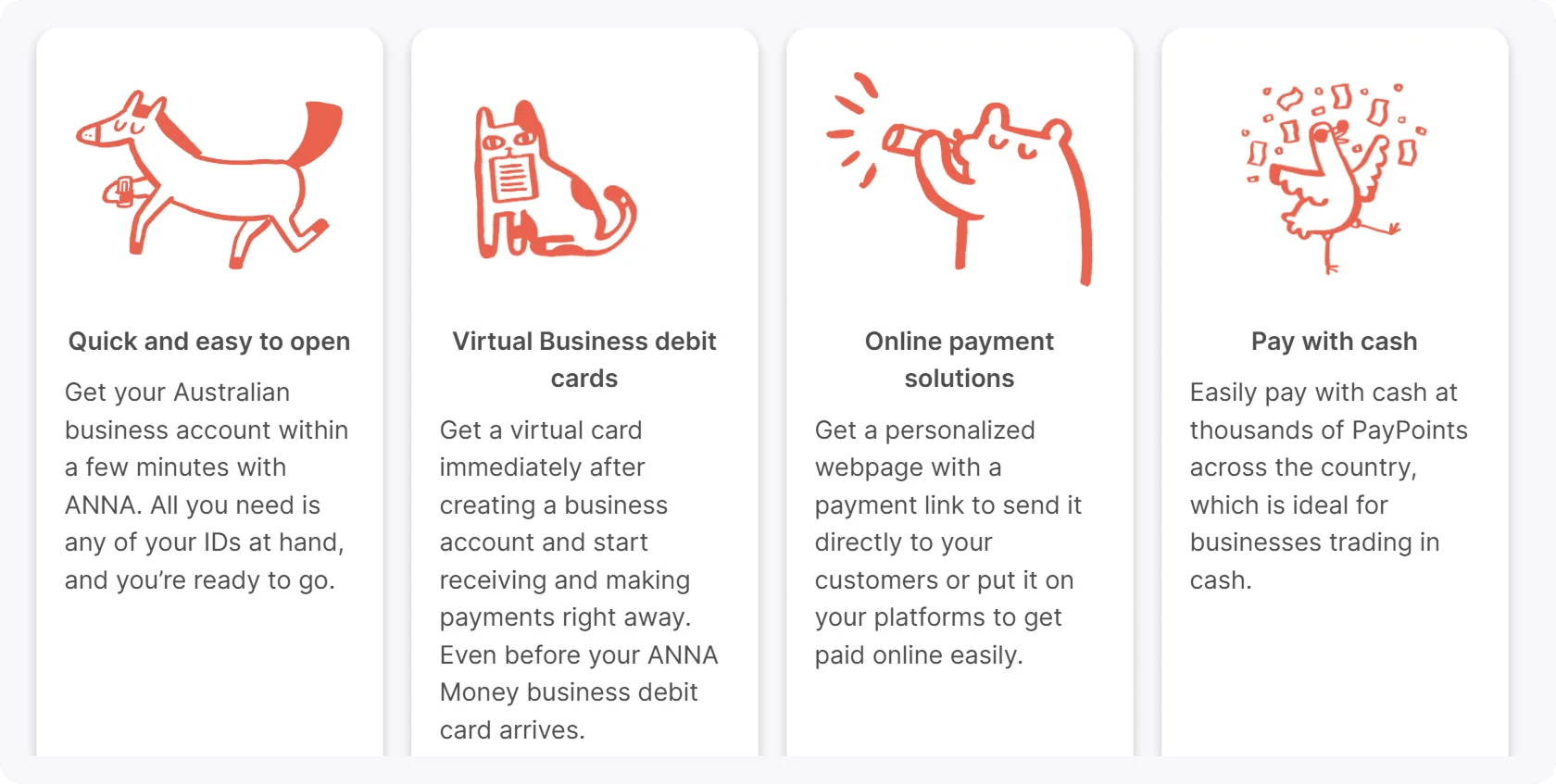
🔸 Key Features and Benefits:
Sign up now and be among the first to experience a hassle-free way to manage your business finances.
Register a business with ANNA and sign up for free - ANNA covers the incorporation fee for you
Register a business today
.svg)