
Learn how to register for GST in Australia with this guide, covering eligibility, steps, and tips for compliance and financial management.
Running a business in Australia comes with many responsibilities, and one of the most important is ensuring compliance with tax laws.
If your business involves selling goods or services, you may need to register for Goods and Services Tax (GST).
GST registration is mandatory for some, while others may opt to register voluntarily.
Regardless of your situation, understanding how GST works, when to register, and what it means for your business is critical.
So, how to register for GST in Australia? Let’s find out below!
Goods and Services Tax (GST) is a 10% tax applied to most goods, services, and other items sold or consumed in Australia. It’s a value-added tax that businesses collect on behalf of the Australian Taxation Office (ATO).
As a GST-registered business, you will:
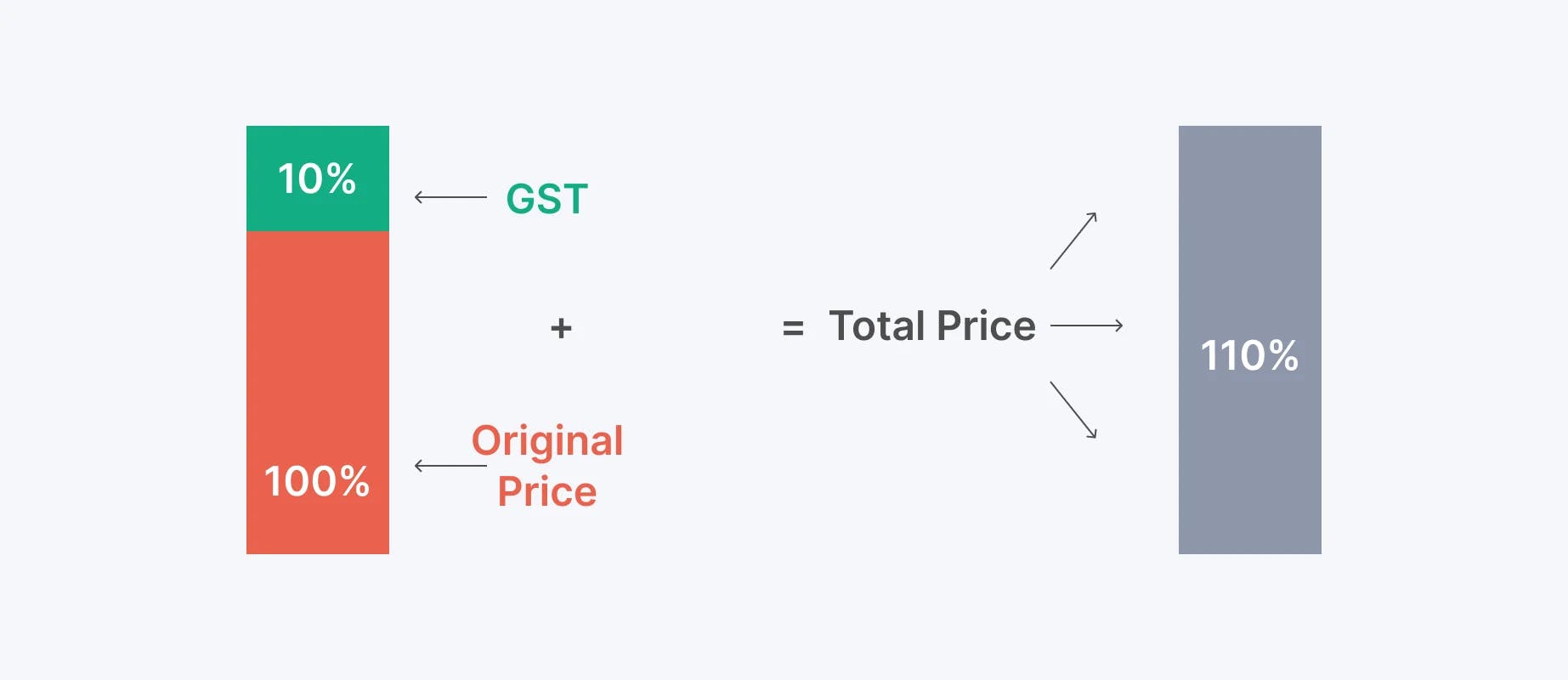
For example:
Not all businesses are required to register for GST. The need to register depends on your turnover and the type of business activities you conduct.
📌 When GST Registration is Mandatory
You must register for GST if:
For new businesses, you need to register if you expect to exceed $75,000 in turnover during your first year.
📌 Optional GST Registration
If your turnover is below the $75,000 threshold, GST registration is optional.
Some businesses voluntarily register to:
Once you register voluntarily, you must remain registered for at least 12 months before deregistering.
Registering for GST involves a few straightforward steps. It is best to prepare in advance and use the right tools to make the process quick and hassle-free.
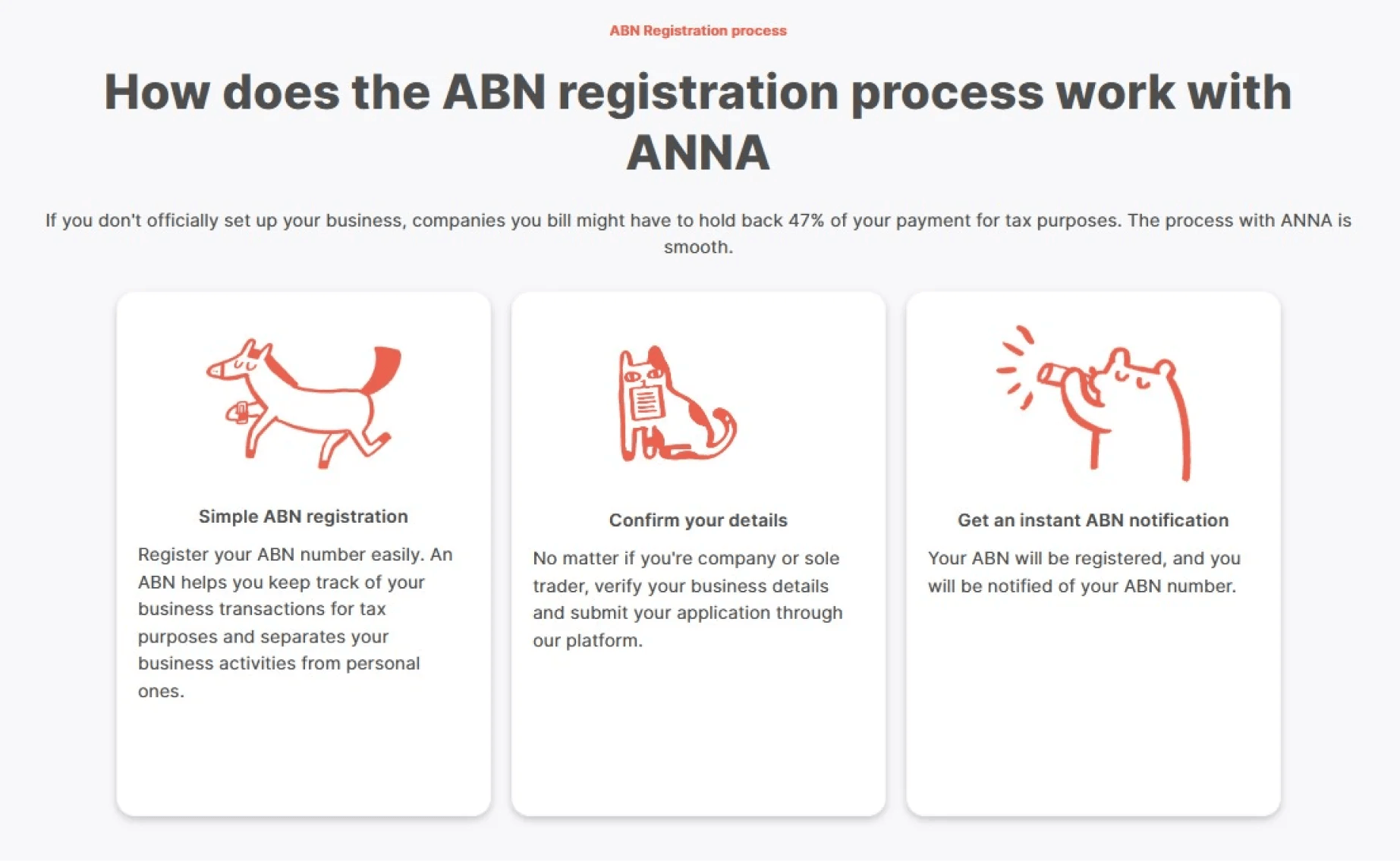
Before you can register for GST, you need an Australian Business Number (ABN). This unique identifier is essential for all tax-related activities, including GST registration.
If you don’t already have an ABN, you can apply online through the Australian Business Register (ABR).
The application is free and usually processed quickly.
With ANNA, this process is quite quick:
After you have your ABN ready, you can register for GST through several methods:
1. Online:
Use the ATO’s Business Portal or the Business Registration Service. These platforms guide you through the process step by step.
2. Phone:
Call the ATO at 13 28 66 to register over the phone.
3. Through a Tax or BAS Agent:
Engage a registered tax agent to handle the process for you. This is often the most reliable option for busy business owners.
4. Paper Form:
Complete the NAT 2954 form (Add a New Business Account), available from the ATO’s publication ordering service.
When registering, you’ll need to provide:
✋ Remember – accuracy is crucial. Providing incorrect information can delay the process or result in penalties.
Once your GST registration is processed, the ATO will notify you in writing. This notification will include:
From this point onward, you’re responsible for fulfilling several GST-related obligations.
A tax invoice is required for any sale over $82.50 (including GST).
It must include:
If you sell a product for $1,100, your tax invoice should show:
BAS is used to report GST collected on sales and GST paid on purchases. Most businesses lodge quarterly, but businesses with higher turnovers may need to lodge monthly.
If you collected $15,000 in GST from sales and paid $5,000 in GST for purchases, your BAS will show a net GST payment of $10,000 to the ATO.
Record-keeping is essential for tracking GST on sales and purchases.
We recommend streamlining this process using accounting software like ANNA, Xero, MYOB, or another tool suitable for your business type.
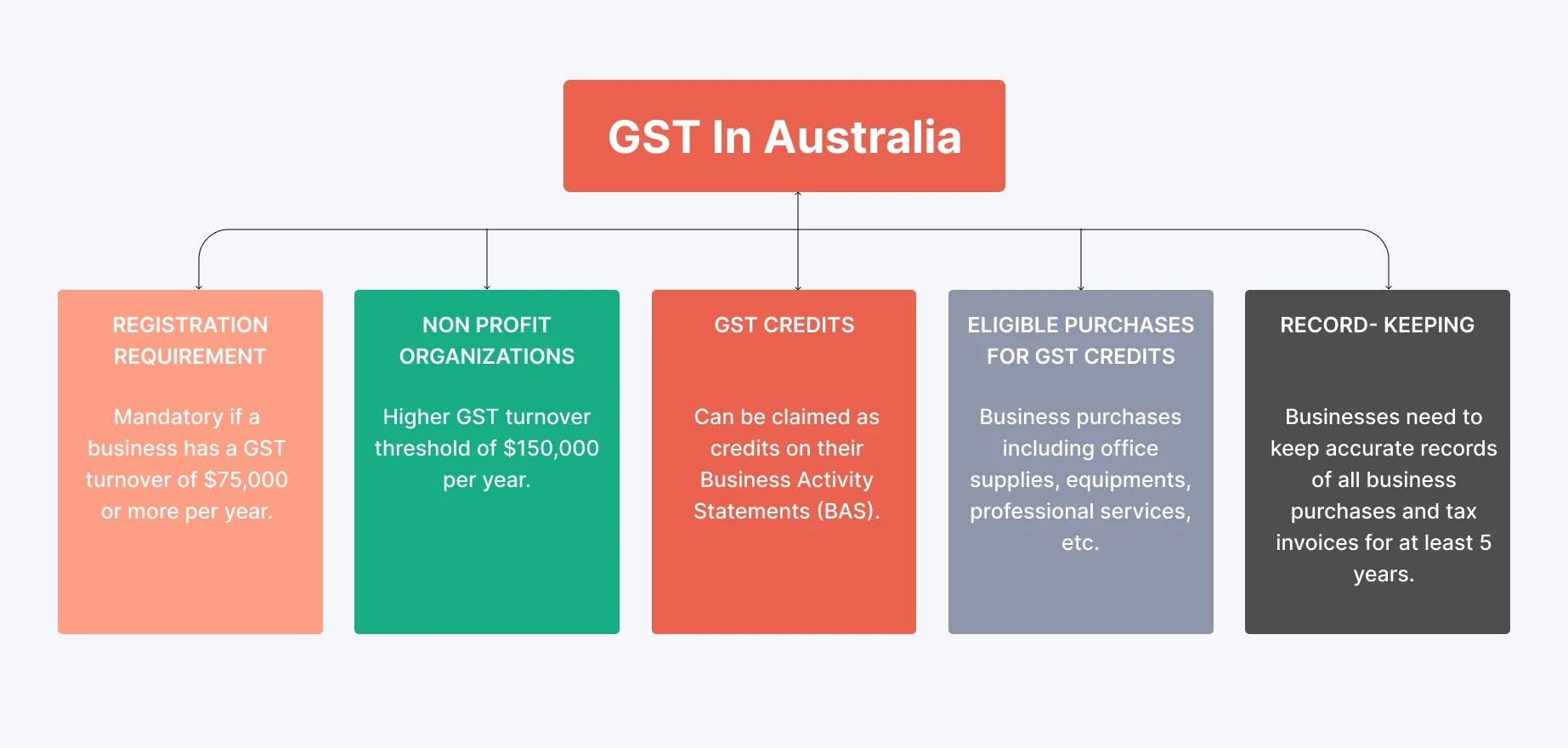
Your GST turnover is your total income from taxable sales (excluding GST) minus:
💡 For instance, Daniel operates a car repair shop. Over 12 months, his income from repairs and parts sales totals $85,000 (excluding GST).
Although his profit is $50,000, his turnover exceeds $75,000, so he must register for GST.
GST registration is mandatory for all ride-sharing drivers, regardless of turnover.
If you drive for Uber, DiDi, or similar services, you must register for GST and lodge BAS, even if you earn less than $75,000 annually.
You may need to register for GST if you’re a non-resident conducting business in Australia.
The rules depend on your activities, and you should seek advice to ensure compliance.
Certain items are GST-free, such as:
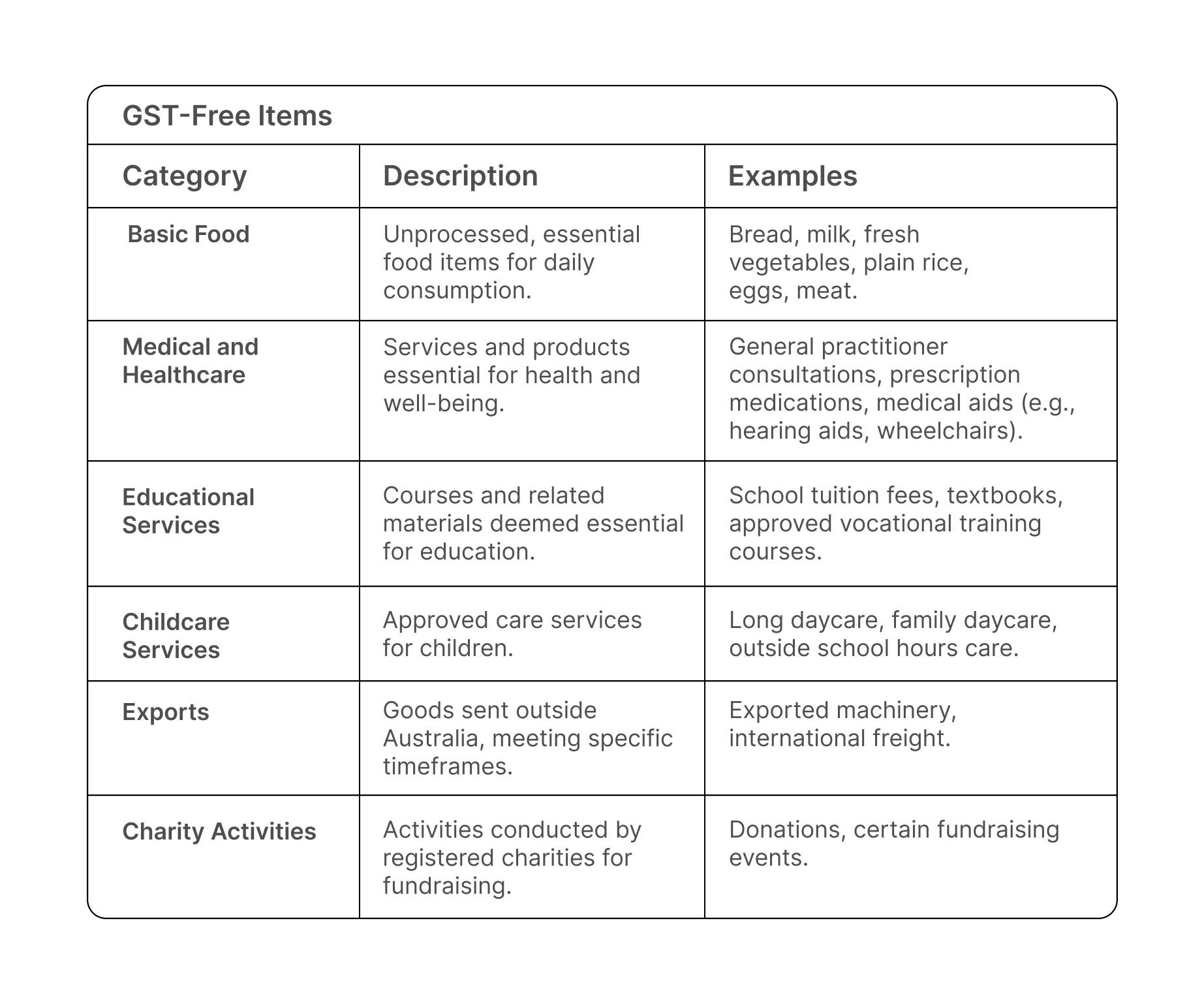
💡 For example, Susan owns a grocery store. While bread is GST-free, soft drinks are taxable.
So, Susan must charge GST on soft drinks but not on bread.
Failing to register for GST when required can have serious consequences:
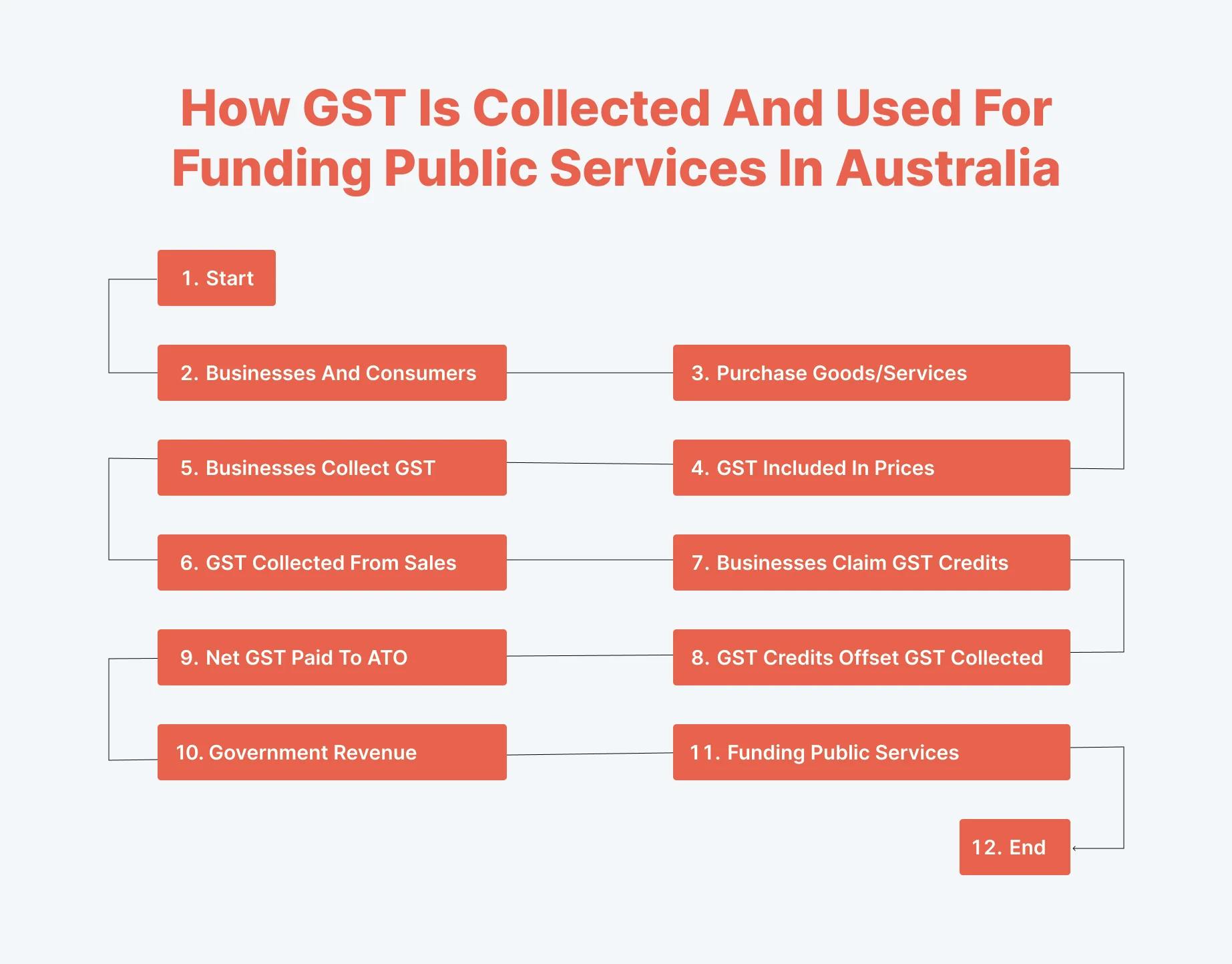
✔️ Tax Credits: Claim back the GST you pay on business purchases, reducing your costs.
✔️ Professionalism: GST registration enhances your business's credibility, particularly when dealing with larger clients who expect tax invoices.
✔️ Compliance: Registering for GST ensures you meet your tax obligations and avoid penalties.
Now, let’s take a look at some business examples that may or may not need to register for GST:
Jessica launches an online store selling handmade jewellery.
She expects to earn $80,000 in her first year. Since her projected turnover exceeds $75,000, Jessica must register for GST and start adding GST to her prices.
Tom runs a gardening service with an annual turnover of $60,000. He voluntarily registers for GST to claim credits on purchases like a new lawnmower and tools.
Emily operates a surf school with a seasonal income. Her total turnover for the year reaches $76,000.
As soon as she surpasses the threshold, she registers for GST and adjusts her prices to include GST.
If you exceeded the GST threshold in the past but didn’t register, you can backdate your GST registration by up to four years.
For example, if you realised in 2024 that you exceeded the threshold in 2020, you can apply to backdate your registration to 2020.
You can cancel GST registration if your turnover consistently falls below the threshold.
However, you must stay registered for at least 12 months after voluntary registration.
GST registration is an essential part of running a compliant and successful business in Australia. You can manage GST effectively by understanding your obligations, keeping accurate records, and using tools like accounting software.
If you're gearing up to register for GST in Australia, ANNA One makes it effortless to manage your business's tax obligations from the start.
With ANNA, you can register for GST alongside your company setup, ensuring compliance with ATO requirements without any stress.
Beyond registration, ANNA handles all your GST needs, from automated calculations to lodging your Business Activity Statement (BAS), leaving you free to focus on growing your business.
If you’re ever in doubt, consult our support – available 24/7!
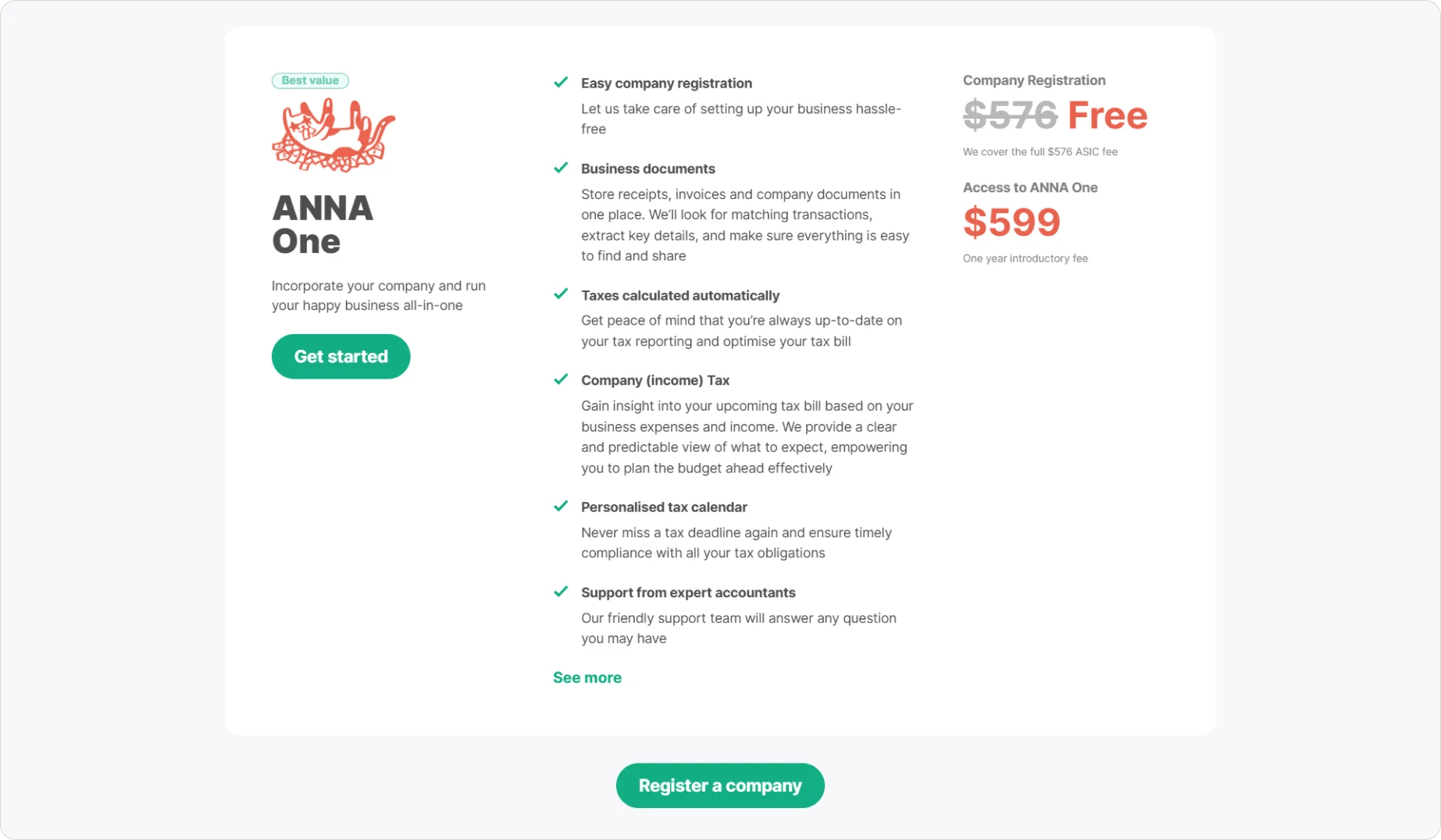
✔ Automatic GST Calculations – Calculate and track GST effortlessly on every sale and purchase. ✔ GST Filing Made Simple – Lodge your BAS directly through ANNA without worrying about deadlines. ✔ Professional Tax Invoices – Generate GST-compliant invoices in seconds, with unpaid invoices followed up automatically.
✔ Bookkeeping Score – Keep your books tidy and categorised with Business Score, which provides simple tasks to optimise your tax savings. The higher your score, the more efficient and tax-savvy your business becomes!
✔ Tax Year Dates – Never miss a tax deadline. ANNA will remind you of key dates and help you prepare for BAS and GST filings in advance.
And much more!
Sign up with ANNA today and ensure that your GST obligations are handled efficiently and accurately, giving you peace of mind from day one!
Yes, you can register voluntarily. This is often beneficial for businesses with significant expenses that include GST.
Most businesses lodge quarterly, but businesses with higher turnovers may need to lodge monthly.
Yes, but only if your turnover consistently falls below $75,000. You must remain registered for at least 12 months after voluntary registration.
Register a business with ANNA and sign up for free - ANNA covers the incorporation fee for you
Register a business today
.svg)