
Learn about the operating ratio in Australia, its importance, how to calculate it, and its impact on your business's financial health.
Running a business is much like surfing – sometimes you're riding high on profits, and sometimes you're paddling against the current of rising costs. But just like surfers need to know the tides and waves, business owners need to know their numbers.
One key number that can give you insights into your business's financial health is the Operating Ratio.
In this post, we'll explain the Operating Ratio, how to calculate it, and why it's important for Australian businesses across all industries.
We'll also look at industry benchmarks and tips on improving this vital metric. Let's get started!
The Operating Ratio (OR) is a crucial financial metric used to assess a business's efficiency. Simply put, it measures the percentage of net sales that goes toward operating expenses. This metric is an essential indicator of how well a business is being run on a day-to-day basis.
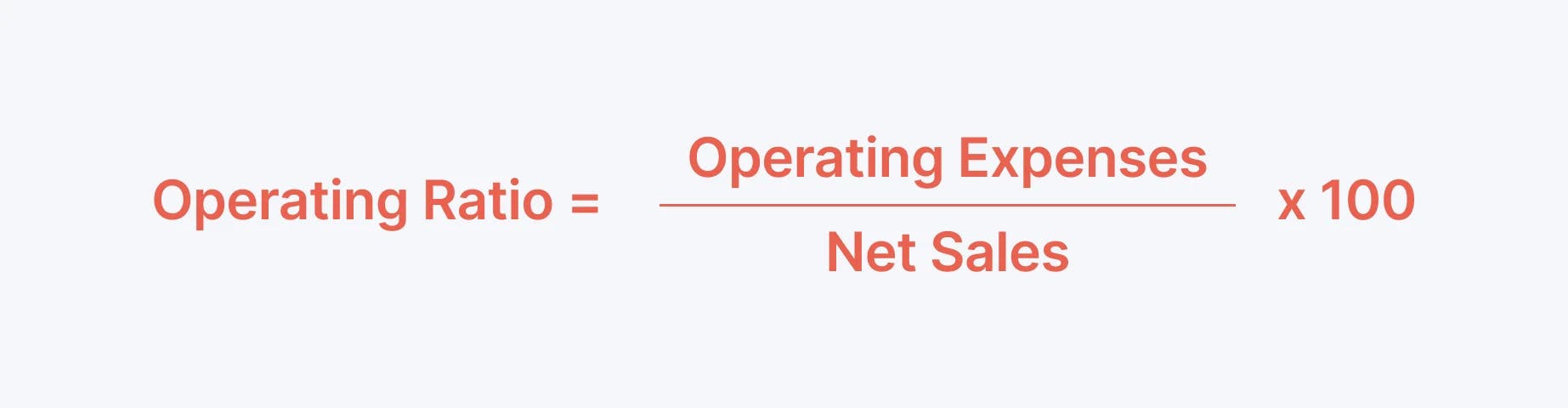
The formula for the Operating Ratio is straightforward:
Here's a breakdown of the two key components:
So, the Operating Ratio essentially shows what percentage of your sales revenue is being consumed by operating expenses. The goal is to keep this ratio as low as possible because that means more of your revenue is available for profits, reinvestments, or other financial goals.
In Australia, where small and medium-sized enterprises (SMEs) make up a significant portion of the economy, the Operating Ratio is a key barometer for financial stability.
Whether you're running a cozy café in Melbourne or managing a manufacturing plant in Brisbane, understanding your Operating Ratio can offer invaluable insights.
Here are some reasons why the Operating Ratio is a crucial metric for Australian businesses:
Calculating the Operating Ratio is relatively simple but requires accurate financial data. Let's take a closer look at how to calculate it step by step.
You'll need your operating expenses and net sales for the period you're analyzing. Operating expenses should include all day-to-day costs that are necessary to keep your business running, while net sales are your total sales minus any returns or discounts.
Use the Operating Ratio formula:
Once you have the result, you can interpret whether your business is operating efficiently. A lower Operating Ratio means your expenses take up a smaller portion of your sales, while a higher OR may indicate inefficiencies in your operations.
Let's take a real-world example to bring this to life.
Meet Anne, who owns a popular café in Melbourne called "Brewed Bliss." Her financials for the year look like this:
To calculate her Operating Ratio:
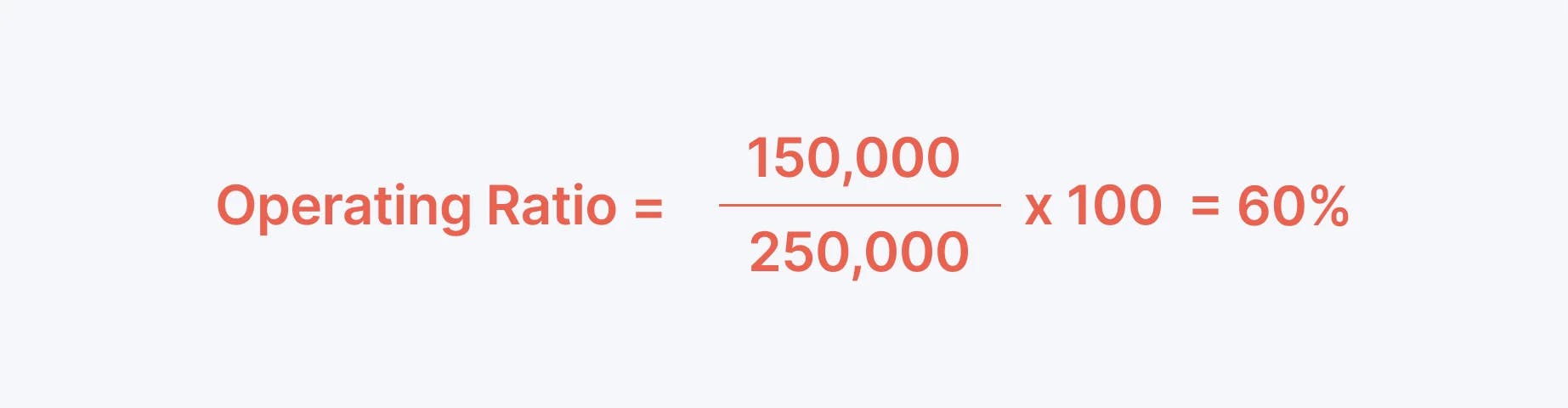
This calculation means 60% of Anne's sales are spent on operating costs, leaving her with 40% for profits and reinvestments.
A "good" Operating Ratio can vary depending on the industry you're in, but here's a general guideline for Australian businesses:
While the above guidelines are good for general business operations, the acceptable range for your Operating Ratio may vary by industry:
The Operating Ratio is more than just a number on your financial statement – it's a vital sign of your business's financial health. Here's why it matters for Australian companies:
The Operating Ratio can serve as an early warning sign for financial trouble.
If your OR is steadily increasing, it could indicate that your operating costs are growing faster than your sales, which may lead to shrinking profit margins.
So, you should monitor your OR regularly to catch inefficiencies before they become a bigger problem.
Knowing your Operating Ratio allows you to make more informed decisions about where to cut costs or invest.
For example, if your OR is creeping up, you might want to reexamine your largest expense categories, like salaries or utilities, and look for ways to reduce costs without sacrificing quality or service.
Tracking your Operating Ratio over time can also help you benchmark your performance.
Comparing your OR with industry standards or your historical data allows you to set more realistic financial goals. For instance, if you notice that businesses in your industry typically have an OR of 60%, but you're operating at 75%, that's a sign you should look for ways to improve.
A high OR can strain your cash flow.
If most of your revenue is tied up in operating expenses, you'll have less flexibility for reinvestment, savings, or expansion.
Maintaining a low OR ensures that you have enough cash flow to cover unexpected costs or seize new opportunities.
If you find your Operating Ratio too high, don't panic – plenty of strategies exist to bring it down. Here are some practical tips for Australian businesses looking to improve their OR:
The Operating Ratio is a powerful tool for managing your business's financial health. When you keep your OR low, you ensure that more of your revenue is available for growth, profit, and future opportunities.
Whether you're running a small café or a large manufacturing operation, knowing how to calculate and use the Operating Ratio can give you an edge in the competitive Australian market environment.
Monitoring it regularly helps ensure you're running an efficient operation that's set up for long-term success.
If you're a business owner in Australia, improving your Operating Ratio means more than just cutting costs or increasing sales.
You also need tools that streamline how you manage everything from company registration to accounting. This is where ANNA shines – a one-stop solution that takes the complexity out of business management.
ANNA helps Australian businesses handle everything from starting up to managing everyday operations like bookkeeping, invoicing, and tax management.
With ANNA, you can streamline all those time-consuming tasks and get a clear picture of your business's financial health – making it easier to keep that Operating Ratio in check.
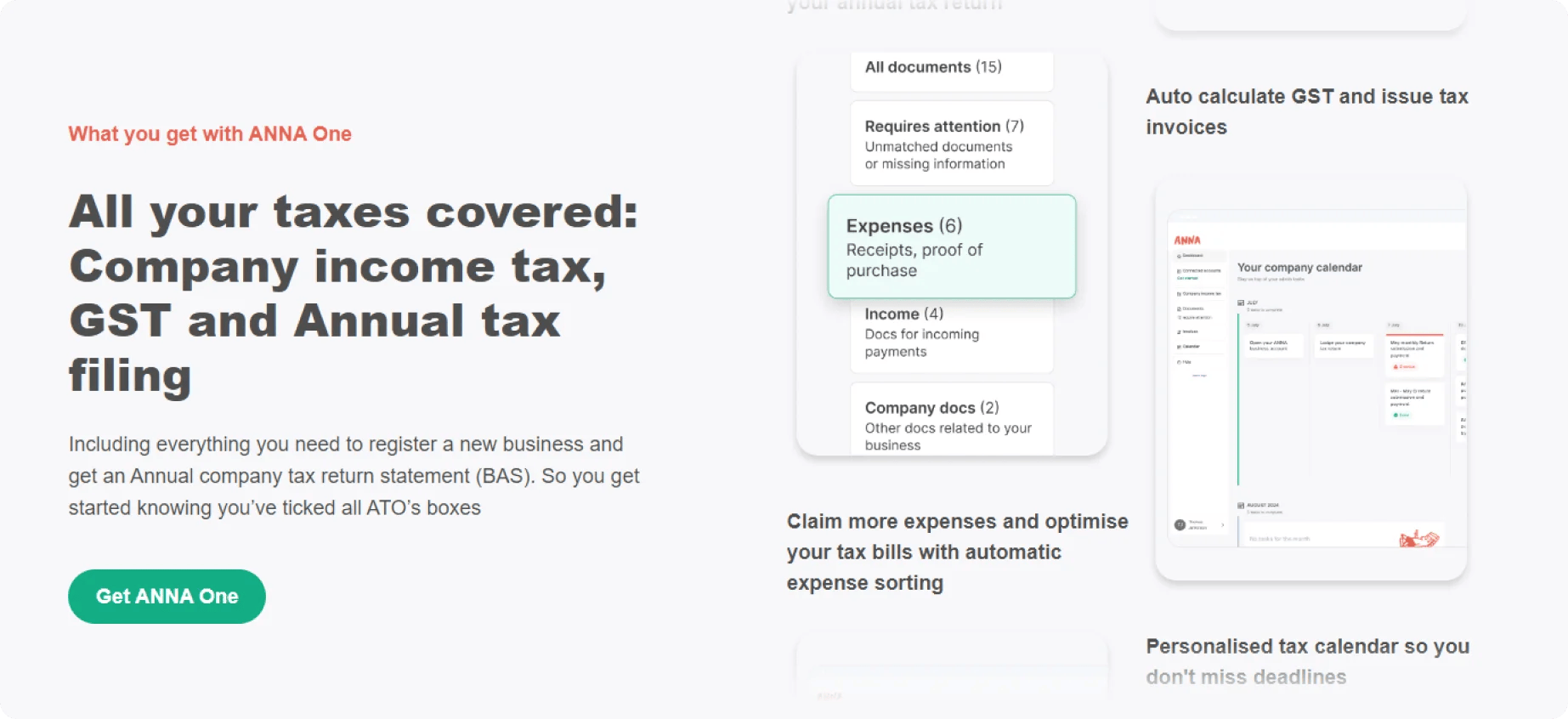
Here's how ANNA benefits your business:
So why wait? Sign up with ANNA today!
Register a business with ANNA and sign up for free - ANNA covers the incorporation fee for you
Register a business today
.svg)