
Starting a business in Australia? Discover the simple differences between a sole trader and a company, including setup, taxes, and personal risk, to pick the right path for you.
Being a sole trader means it’s just you - you run the show, keep the profits, and make all the decisions. It’s quick and affordable to set up, and perfect for freelancers, small side hustles, or anyone testing a business idea.
The flip side? You and the business are legally the same. So if your business owes money or gets into trouble, your personal assets (like your home or car) could be on the line. You’ll also report all business income and expenses on your personal tax return.
Best for:
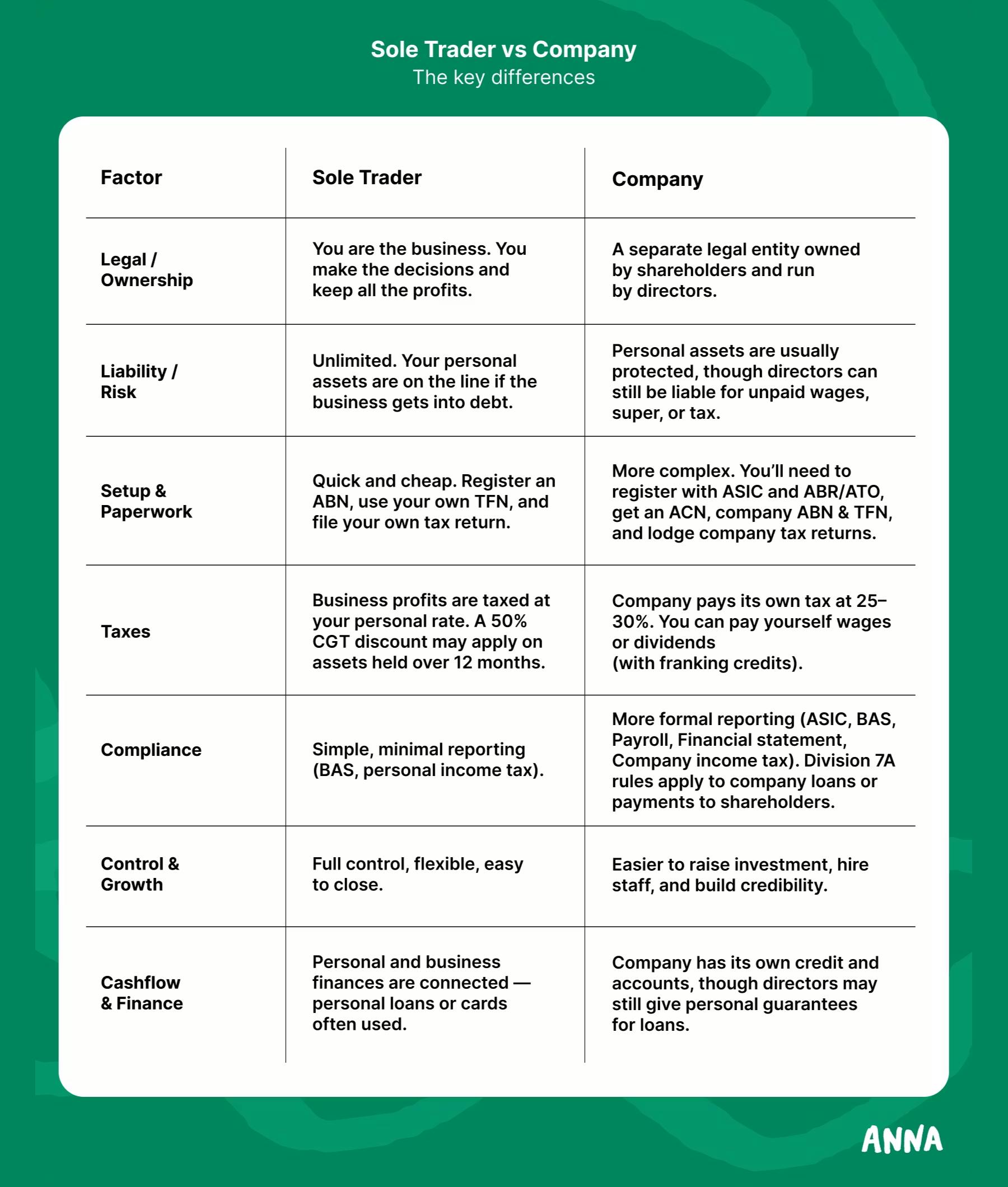
A lot of small businesses start out as sole traders - it’s simple, flexible, easy to run. But as profits grow, a company structure often makes more sense.
You might think about switching if:
Emma runs a catering business in Sydney.
As a sole trader:
As her business grew, so did her profits (and her tax bill). She realised she could keep more of her earnings if her business paid the 25% company tax rate instead of her personal rate. She also wanted to hire permanent staff and protect her personal assets.
So, she made the switch.

*Rounded, simplified figures for example purposes
By forming a company, Emma could reinvest more of her profit, hire employees, and build credibility with clients and investors.
Emma’s car is a depreciating asset, so it loses value over time. When she moves it from her sole trader business into her company, it triggers a 'balancing adjustment event'. In simple terms, any gain or loss from the car affects her personal taxable income.
That means any gain or loss may affect her personal taxable income - but there’s a possible small business restructure rollover (Subdivision 328‑G) that can help her avoid immediate tax, if she meet certain conditions.
In practice, most business cars lose value, so any gain or loss is usually small, and rollovers rarely provide a significant tax benefit.
Emma will also need to transfer the registration and pay stamp duty, so the company becomes the legal owner.
A Quick Note on Personal Services Income (PSI)
If most of your income comes from your personal skills or labour - like consulting or freelancing - PSI rules might apply. They can affect how you claim deductions and whether income-splitting through a company is allowed. We’ve got a separate blog explaining PSI in plain English.
Sole trader: simple, flexible, and low-cost - great for starting out. Company: structured, protective, and scalable - great for growing.
Many Australian businesses begin as sole traders and move to a company when it’s time to level up.
Key takeaway: Pick the structure that fits your goals, income, and comfort with risk. And before you lock it in, have a quick chat with your accountant - or with us at ANNA Money - to make sure you’re set up the smart way.
Got questions? Reach out to us via app chat. You can also find more info about business structure on this website.
ANNA +Taxes is available for newly registered companies - first 1,000 customers get 6 months free. We auto-categorise your transactions and take care of your lodgements.
Register Now
.svg)