
Discover everything you need to know about selling on Amazon Australia, including setup, fees, strategies, and tips for success.
What does it take to set up a seller account? How do you navigate GST requirements or find the right fulfillment strategy? And, of course, “Can you sell on Amazon Australia?” (the short answer is: absolutely!).
This blog post will provide a step-by-step approach to help you establish a thriving Amazon presence, including critical insights into keyword research, pricing, advertising, and more.
Let’s begin!
Australia has witnessed impressive growth in online retail over the past decade, accelerating even further in the mid-2020s.
More shoppers are turning to the internet for convenience, product variety, and, most importantly, fast shipping.
One of the key drivers behind Amazon Australia’s success is the steady rise in e-commerce adoption.
In 2025, an even larger percentage of Australians are comfortable making purchases via desktop, tablet, and mobile devices.
With constant improvements to internet speeds and expanded smartphone usage, mobile-friendly listings are now a necessity.
Sellers who adapt to this trend early can capture a greater share of impulse buyers who scroll Amazon on their phones.
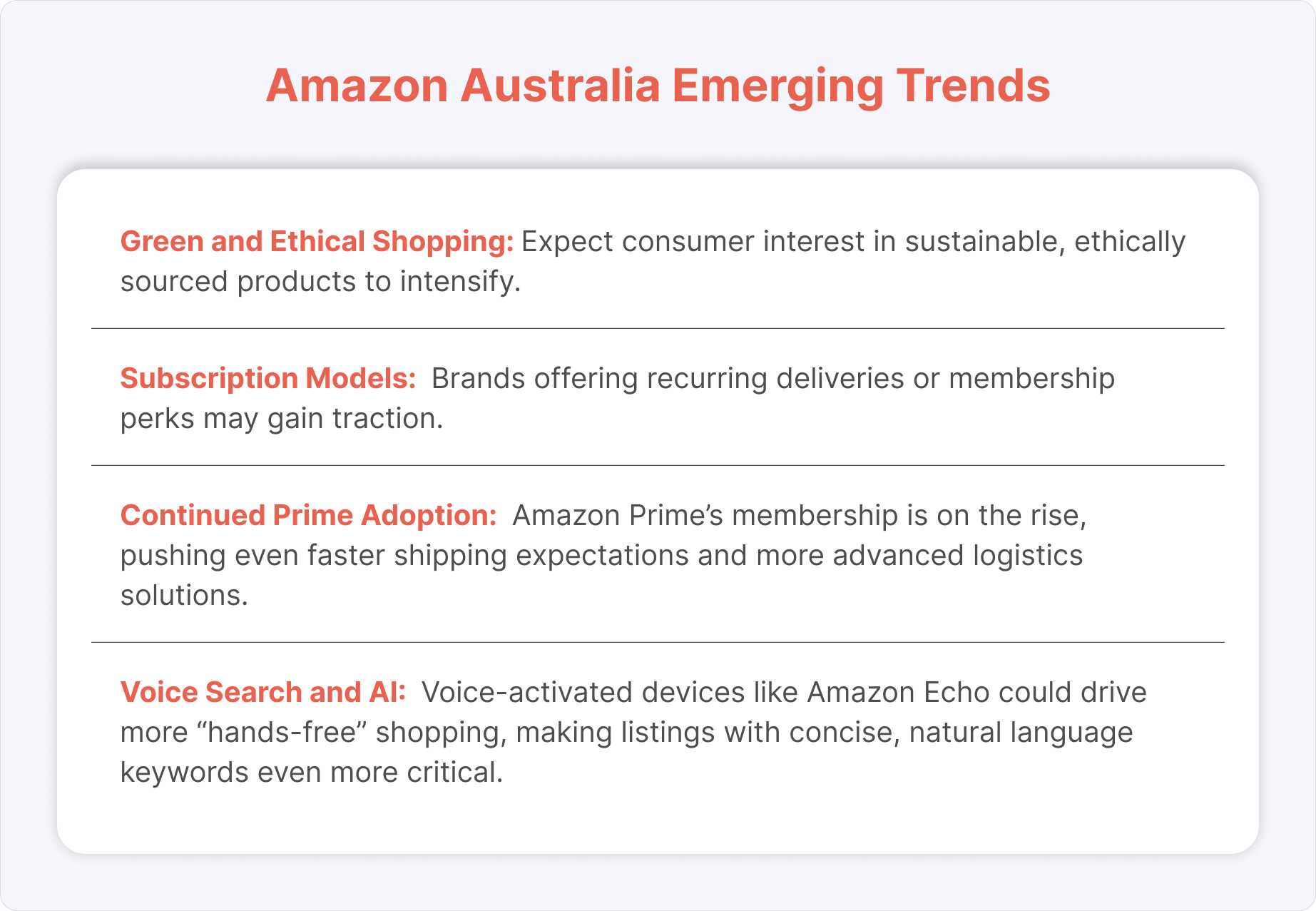
Amazon Prime has also gained ground in Australia, offering perks like free two-day shipping and exclusive deals.
This membership program not only influences customer loyalty but also encourages frequent browsing on the site.
For sellers, listing products that qualify for Prime (often achieved through Fulfillment by Amazon, or FBA) can significantly enhance visibility and buyer trust.
If you’re an international seller, Amazon Australia provides a convenient entry point into the Asia-Pacific region.
A single Seller Central account can help you manage multiple marketplaces, opening doors to countries like Japan and Singapore.
No matter if you’re exploring a new demographic for your existing brand or launching a fresh product line, Amazon Australia is a relatively straightforward way to test the waters.
Here’s a breakdown of the core criteria and how they apply in 2025:
Once you’ve determined you’re eligible, the next step is to register formally. Here’s what to expect when creating your seller account:
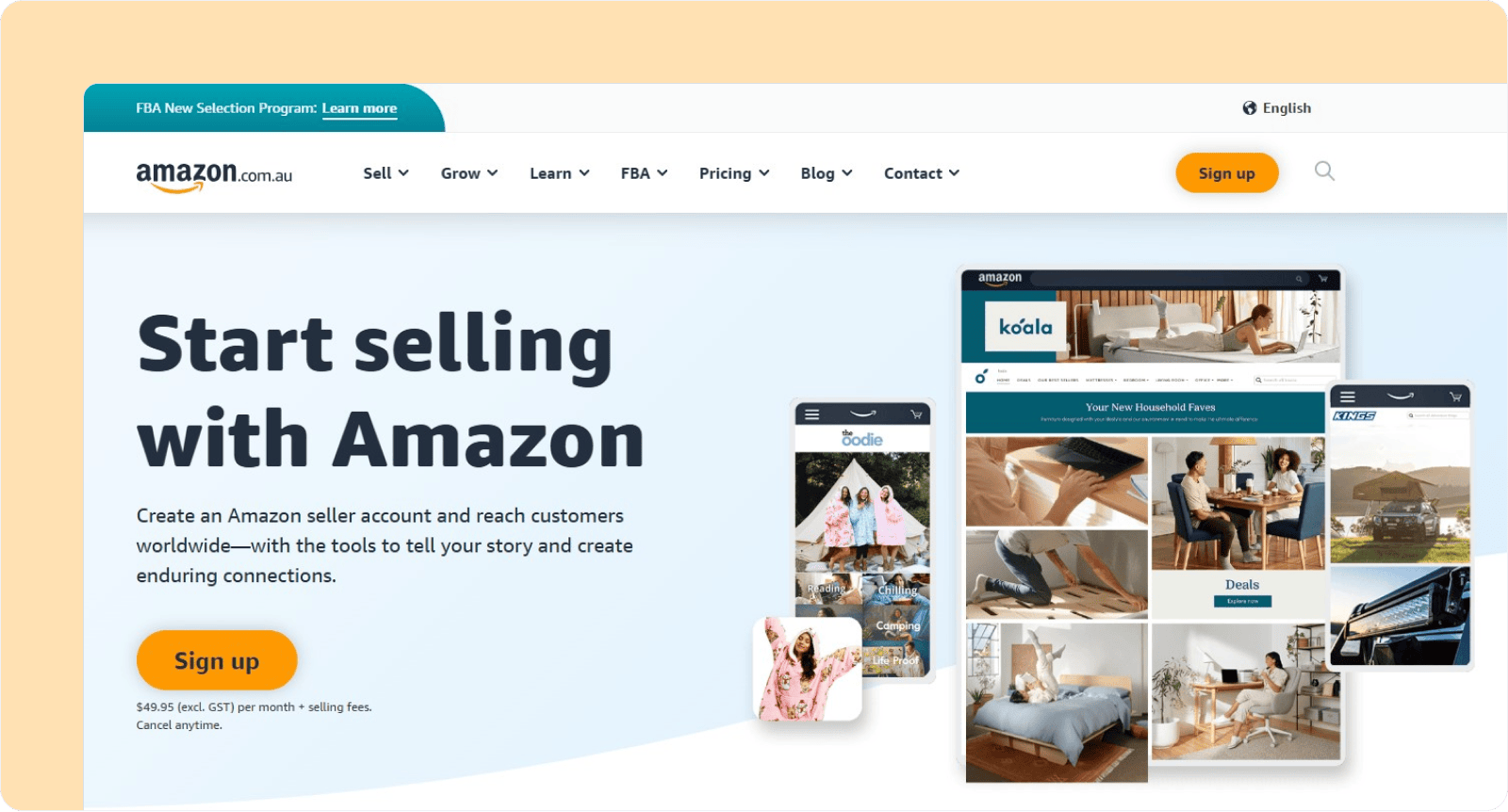
Amazon Australia offers two main plans:
When deciding between these plans, estimate your potential monthly sales volume. If you expect your listings to move quickly, the Professional Plan may save you money while offering helpful tools for scaling.
Before starting the registration process, collect the following:
Navigate to Amazon Services or Amazon Seller Central and follow the prompts. You’ll be asked to enter:
After filling out these sections, Amazon may perform a quick identity verification. Your account can be approved within days, but have patience; delays can occur if more documentation is required.
Once approved, you’ll enter the Seller Central dashboard, where you can:
Australian online shoppers have grown accustomed to swift shipping times, mobile-friendly sites, and comprehensive product listings. Knowing what they expect helps you adapt your business model for maximum impact.
While Amazon Australia features a wide array of items, certain categories consistently outperform others:
Local consumers place a premium on fast, reliable shipping.
The rise of Amazon Prime in Australia means many buyers expect their orders within a couple of days, if not sooner.
As a seller, consider how your fulfillment model impacts customer satisfaction.
If you’re self-fulfilling, be proactive in shipping out products quickly to keep pace with FBA-level delivery standards.
A growing number of Aussie shoppers use smartphones to browse, compare, and purchase products on Amazon.
Ensure that your listings – including titles, bullet points, and images – render well on mobile devices.
Since screen space is limited, clarity and conciseness are vital. Mobile optimisation can be the difference between high conversions and missed opportunities.
Australian consumers are increasingly conscious about ethical sourcing and environmental impact.
Emphasise sustainability if your products meet eco-friendly standards or social-responsibility criteria.
Mention eco-friendly packaging, fair-trade certifications, or local manufacturing if they apply – these values can resonate strongly with modern buyers.
Harness Amazon’s built-in analytics tools or third-party software to track sales data, keyword performance, and customer demographics.
Analysing these trends helps refine your product offerings, pricing, and marketing strategies over time. The more you understand Australian shopper behaviour, the easier it becomes to adapt and thrive.
One of the most direct routes to success on Amazon Australia is optimising your product listings.
Doing so involves a strategic blend of relevant keywords, high-resolution images, and persuasive copywriting.
Start by identifying popular search terms customers might use – this includes short, broad keywords and more specific, long-tail phrases.
Tools like Helium 10, Jungle Scout, or Amazon’s own autocomplete can reveal valuable insights.
Insert these keywords naturally into your listing title, bullet points, and product description. Avoid keyword stuffing because Amazon may penalise you if the text appears robotic or spammy.
Your title is the first (and sometimes only) impression shoppers get of your product. It should:
Bullet points make critical product information digestible. They should be short yet descriptive, each highlighting a unique selling point, such as:
Use succinct language to highlight benefits rather than just features. Show the customer how the product will improve their day-to-day life.
While some shoppers won’t read the description, many do, especially those making higher-value purchases.
Write clear, detailed paragraphs that expand on the bullet points.
Offer specifics such as size charts, usage tips, or background stories about the brand.
If relevant, add disclaimers (e.g., battery safety or allergen info) to bolster trust.
Great images can significantly impact your click-through rate (CTR) and conversion rate. Include multiple angles, close-ups, and lifestyle shots. Aim for:
When done correctly, listing optimisation not only improves your organic search ranking but also persuades potential buyers to click the “Add to Cart” button.
Amazon offers two main fulfillment methods – Fulfillment by Amazon (FBA) or Fulfillment by Merchant (FBM). Each approach has implications for shipping times, costs, and the overall buyer experience.
With FBA, you send your inventory to Amazon’s warehouses.
From there, Amazon handles storage, picking, packing, and shipping. FBA items often qualify for Prime, a status that can dramatically increase visibility and sales.
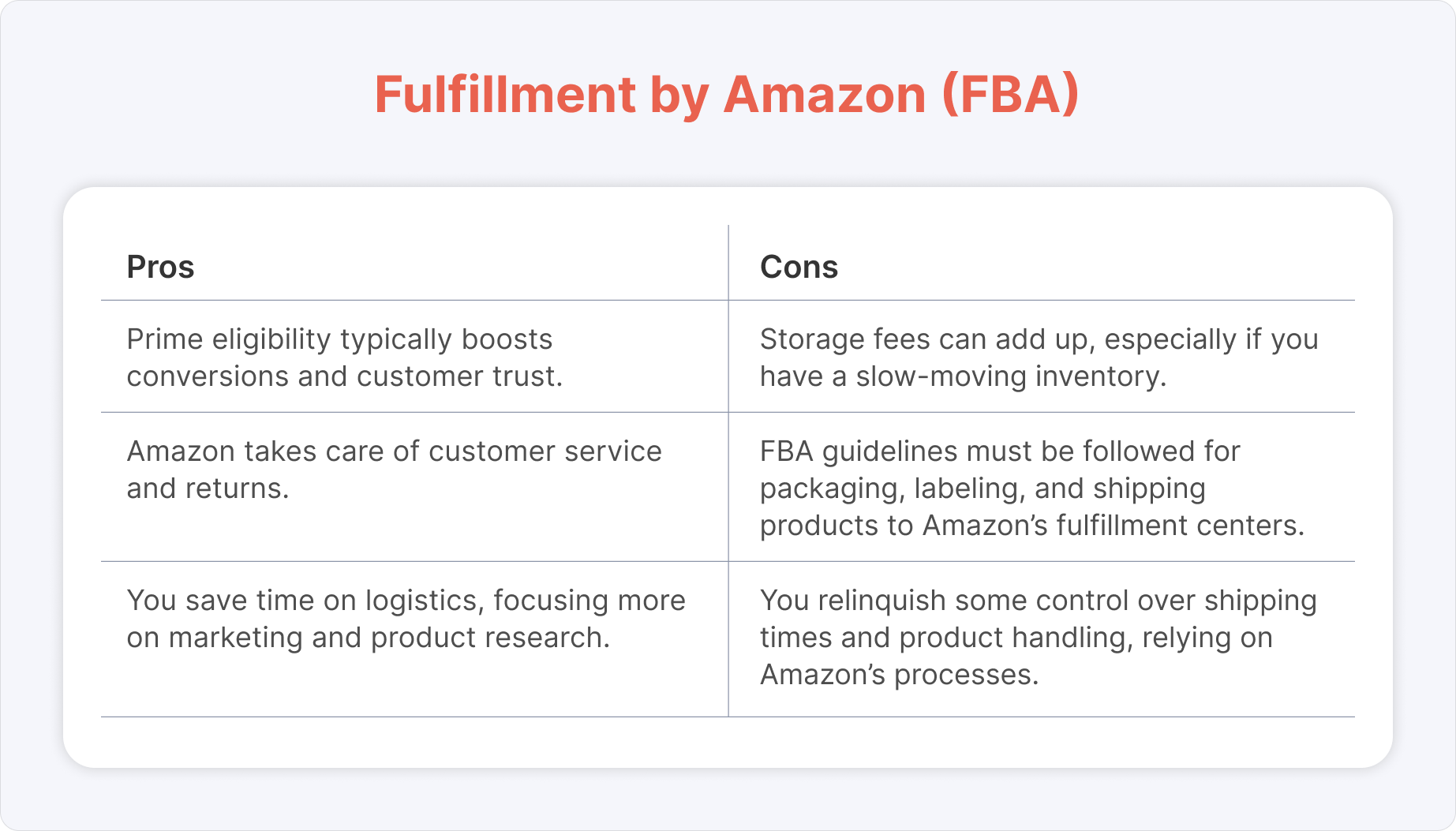
FBM means you manage logistics yourself – storing inventory, packaging orders, and handling returns.
This model suits sellers with unique products or those who want full control over their supply chain.

Some sellers opt for a hybrid method, using FBA for their best-selling products (ensuring Prime benefits and faster shipping) while self-fulfilling other SKUs with lower turnover. This approach can strike a balance between cost management and service quality.
Just having a live listing isn’t enough – you need a marketing strategy to stand out in a crowded space. From Amazon’s built-in advertising tools to external campaigns, here’s how to make your products shine.
Sponsored Products and Sponsored Brands allow you to display your items prominently in search results and on product pages. By bidding on specific keywords, your listings can appear to shoppers who are actively searching for relevant items.
Successful advertising strategies often start small. Test different keyword bids, monitor your Advertising Cost of Sales (ACoS), and refine based on data. Over time, you’ll uncover which keywords and ad types deliver the highest ROI.
Amazon offers various promotional tools:
These promotions tap into buyers’ love of savings and urgency, especially during peak shopping seasons like Prime Day, Black Friday, or holiday events in Australia.
While Amazon is a massive ecosystem, it can also benefit from external promotion.
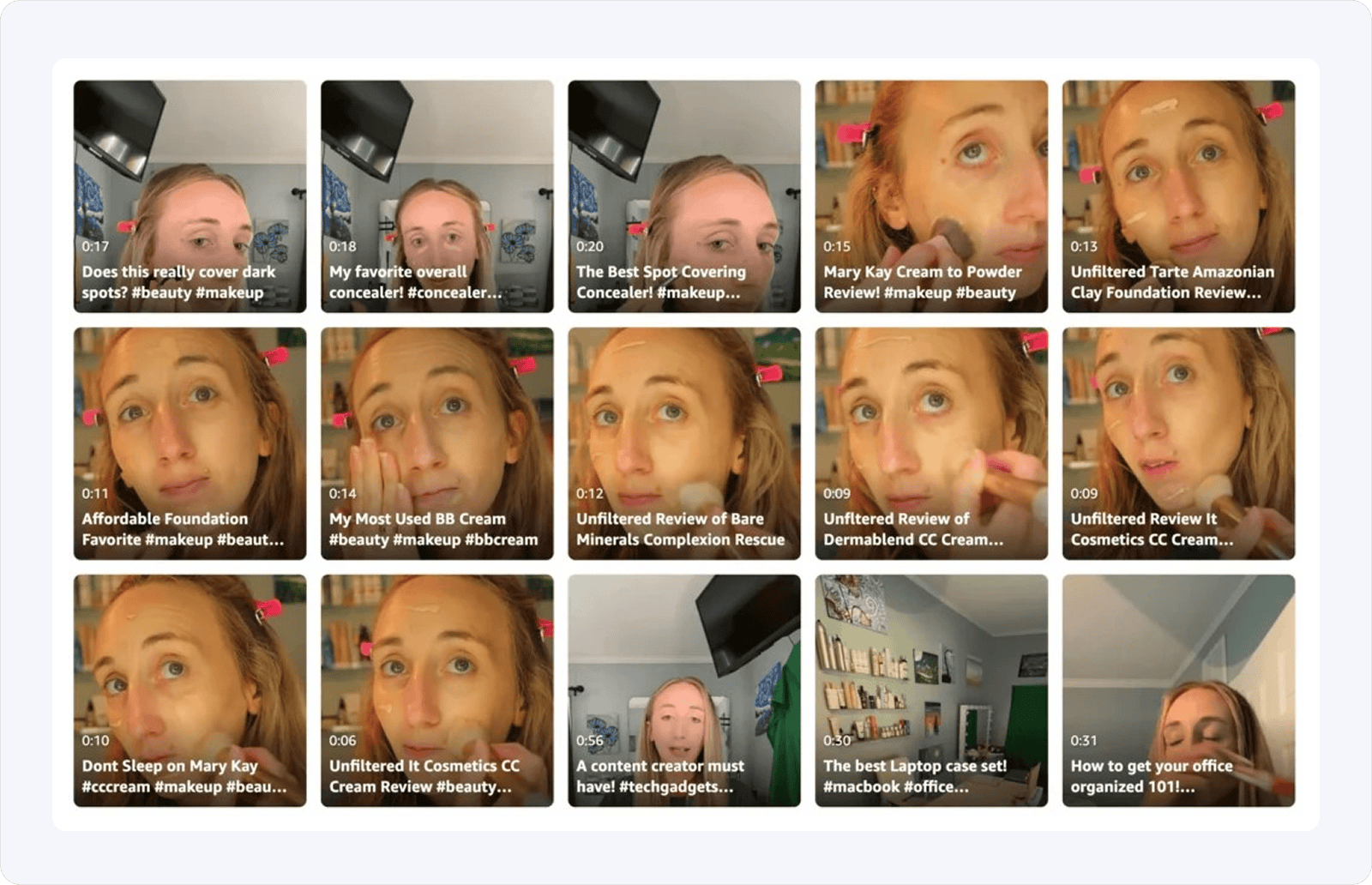
Drive traffic from social media platforms like Facebook, Instagram, TikTok, or YouTube. Share engaging content – demonstrations, behind-the-scenes glimpses, or tutorial videos – to highlight your products’ unique benefits.
If you own a brand website or are an influencer, cross-link your Amazon listings, making it easy for visitors to complete their purchases on the marketplace.
Encourage satisfied buyers to leave feedback through polite post-purchase emails or package inserts. However, abide by Amazon’s review policies – never offer incentives for positive reviews, as that can lead to account suspension.
Whenever possible, respond to reviews (both positive and negative) in a timely and professional manner.
Apologise and offer solutions for issues, and thank customers who leave praise.
Marketing on Amazon is dynamic, so success depends on continuous monitoring.
Analyse daily sales data, ad spend, conversion rates, and competitor activities.
If you notice certain products underperforming, consider re-optimising listings, testing new keywords, or tweaking your advertising strategy.
If you are willing to track metrics, enhance product listings, and address buyer needs, you stand a strong chance of establishing a profitable venture on Amazon Australia.
A well-managed store can attract a loyal customer base in a market that values reliable service and high-quality products.
And if you need an extra push – here’s ANNA!
Seamless, Cost-Free Company Registration
Getting your online venture off the ground should be as straightforward and affordable as possible.
ANNA assists you in registering your e-commerce business free of charge, saving you up to $576 in government fees. Once registered, you can concentrate on reaching more customers instead of worrying about paperwork.
✔️ All-in-One Business Account
Having a dedicated business account is essential for any Limited Company.
Personal bank accounts often lack the tools necessary for tracking professional transactions. ANNA provides an instant, fully functional business account the moment ASIC approves your registration. This simplifies money management and separates your personal finances from daily operational expenses.
✔️ Privacy with a Virtual Address
Avoid publicly displaying your home address for official matters. ANNA offers an Australian virtual address, which receives all crucial correspondence on your behalf.
Incoming mail is scanned and emailed to you the same day, helping protect your privacy and ensuring you never miss important documents.
✔️ Seamless E-commerce Integrations
Connecting ANNA to your preferred e-commerce platforms – Amazon, Etsy, Shopify, WooCommerce, and others – allows automated importing of sales data.
This integration streamlines tax calculation and compliance, ensuring your quarterly and annual reports stay accurate. ANNA calculates relevant GST, files returns with the ATO, and keeps you on track for each tax deadline.
✔️ Transparent Pricing and Support
From straightforward, no-cost company registration to advanced tax management, ANNA has plans that suit varying business sizes and budgets.
Access to expert accountants and a dedicated customer support team means you’ll have guidance whenever you need it. Spend your time on growth strategies rather than wrestling with admin.
Register your e-commerce company now and discover how ANNA’s automated bookkeeping, integrated banking, and personalised support can give you a head start on successful Amazon selling.

.svg)